There are certain folks who I cross paths with in the fly fishing world who I completely relate with. Josh Varner being one of them as a result of his tireless effort, determination, attention to detail and work ethic to provide the consumer with a superior product. The late Chris Helm was a man who did the same and for those of you who might remember him, was considered the godfather of great deer hair back in the day. Josh has started his own business to fill a hole in our deer hair market, a hole that for several years all those who tie with deer hair would constantly complain (myself included, regularly I might add) that it was so damn frustrating trying to get your hands on even mediocre hair at best.
Josh has not only raised the bar, he has set the standard, and I for one love that. I am lucky enough to use his wares exclusively and my flies, which I take great pride in tying under the same principles are better because of it. Like Charlie Craven says, “why tie shoddy flies, tie beautiful flies your proud to fish”.
Josh has a tremendous product with a few colors that I feel have fallen under the radar a bit, so I am here today to help some of you get a better understanding of what types of flies other than the bigger hair bug streamers that this hair is extremely useful for. The tying influencers online regularly miss the mark on the various uses of materials, well because most of them honestly don’t really know what the hell they’re talking about, or lack the experience to convey the many uses of said material. I feel qualified in saying this as I tie flies just about every day of the year, with a 20 year average of 2,000 dozen flies a year, give or take. I think you could say that I might have a little insight on the topic, but I won’t go any further on that, I will save that for a rather pointed future rant.
Most folks think that a material might only have one or two uses based on a specific pattern they have seen tied before or read about. But truthfully, the beauty of many if not all materials is they possess many uses, the only caveat being is the person seated at the vise needs to explore them with their imagination and creativity.
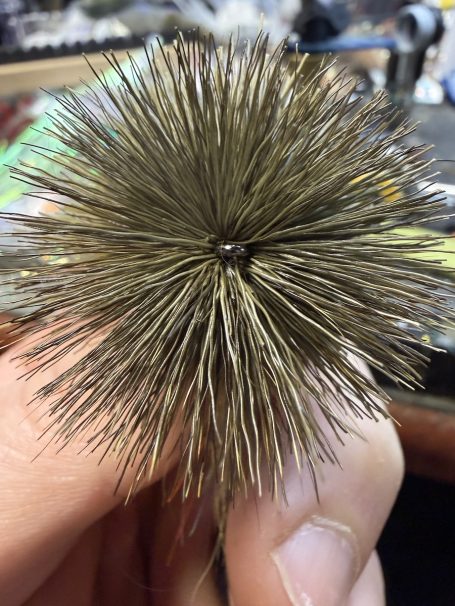
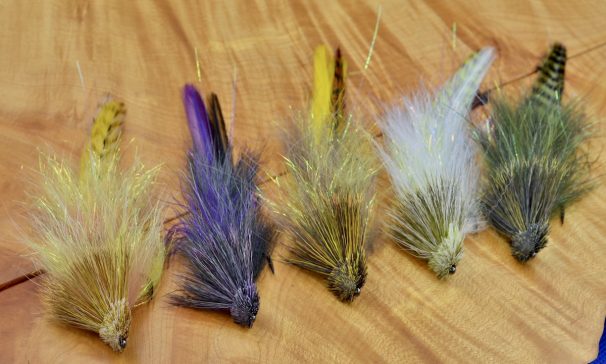
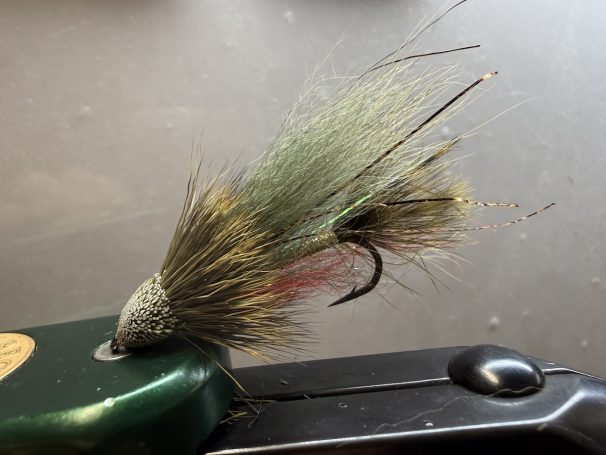
At first glance, one might easily deduce that this hair has one use, and that is for tying spun or stacked deer hair streamers. But the discerning tyer recognizes that is just one of it’s uses, as it truly is a great choice for down wing dry flies like caddis and stones, despite being substantially longer than what you would traditionally need. But if you dive even further, you will soon realize that this hair is also a great substitute for comparadun or upright wing flies as well. Add in that it is lovely for smaller muddlers and oh yes, medium to larger sized extended body dry flies and you now have a handful of alternative options with just one hair.
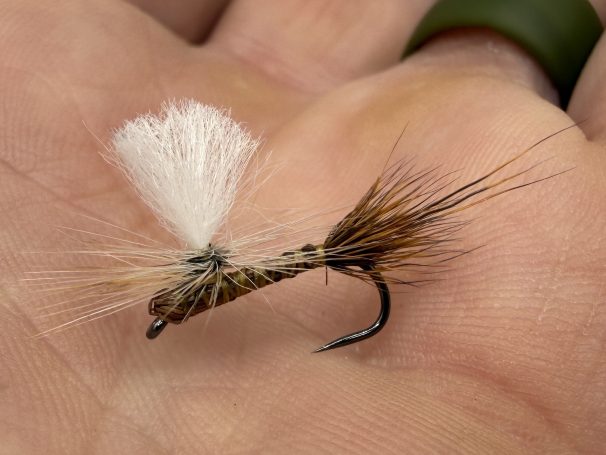
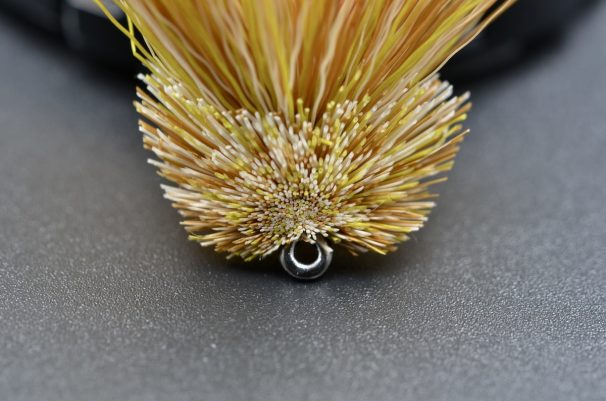
As you can see, the hair itself is very straight, uniformly dyed and extremely soft, an attribute consistent with every patch Josh stamps with his logo of approval. For the tyer, this makes it very enjoyable to work with. Extended bodies, and hair bodies for most dry flies can be made with ease as the hair is not coarse, brittle and oversized. There is nothing worse than trying to perform finer work with deer hair and having to fight it every step of the process. Hair bodied dries take practice, but they are increasingly more difficult when the hair you have possesses the aforementioned attributes. Curved hair is equally as difficult to work with, and if its is coarse and brittle which is usually the result of either being over bleaching, tanning, dyeing or all of the above, well it becomes an exercise in futility.
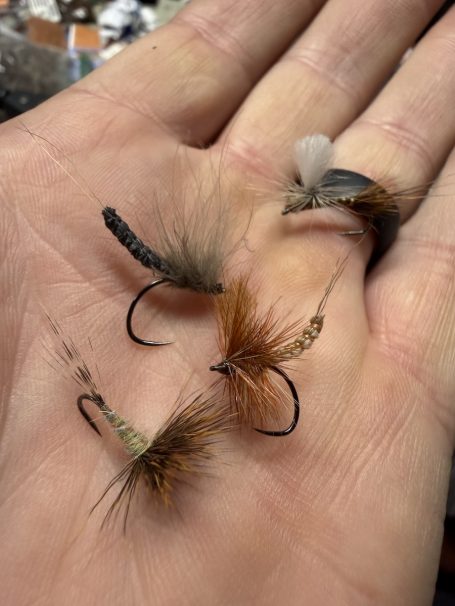
Aside from those very important qualities, Varner offers this hair in a plethora of colors, nineteen (19) to be exact. So there is a very good chance you can not only cover many of your favorite streamer color combos, but you will also have all of your bug options covered. For some clarity, here are the colors he offers in 3×4 patches of this hair: Ash, black, bleached, blonde, brown, charcoal gray, cinnamon, copper, dark olive drab, ginger bleach, golden olive, gray, natural, olive, pearl gray, rust, sculpin olive, tan, and yellow. A couple of my absolute favorites are ash, cinnamon, and dark olive drab but honestly you could use natural exclusively and cover a ton of bases alone.
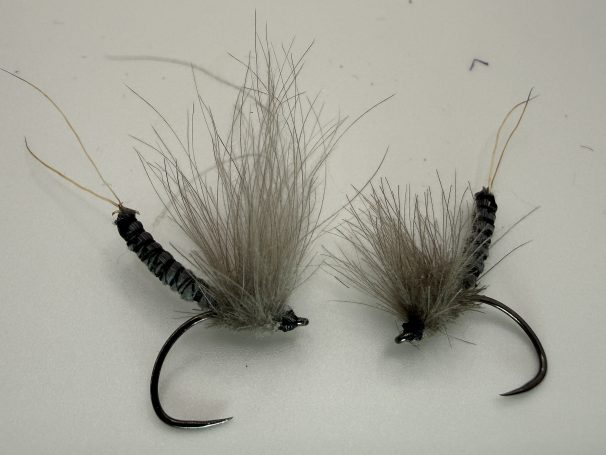
Charcoal gray sounds like a rather obscure color to many, but if you enjoy fishing the Slate Drake hatch (Isonychia) which comes about early to mid summer and again in early fall, well you can understand the importance of this color. You can literally use this color hair for the body, wing or both on any style of “Iso” imitation and have a solid fish catching machine in your fly box when these rather large bugs are about (size 14-8). For our June Newsletter, I will highlight a couple of patterns that I prefer to fish whenever those bugs are around, using this color of hair, I promise.
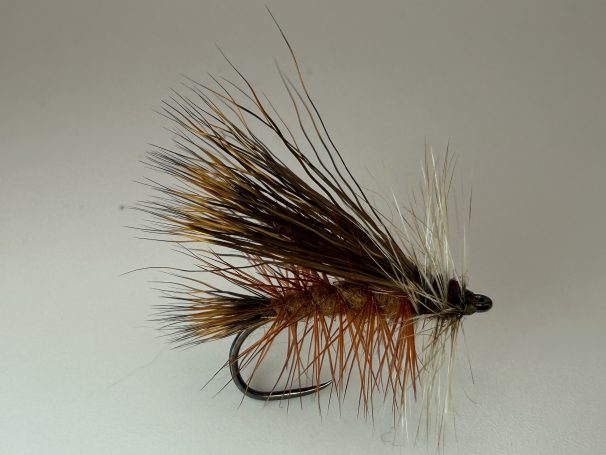
As the pictures clearly articulate, Varners Big Bug Deer Hair ties wonderfully elegant comparaduns, downswings like caddis and stimulators, extended bodied mayflies, and of course various styles of muddler; I personally love it for my Foxy Muddler pattern which I intend on updating with some new colors courtesy of this hair. Mid season grade hair is a prime candidate for all of the above but truly shines for your bigger bug imitations in my honest opinion. And you might even find that some of your smaller denier threads will flair and spin this hair with ease.
Despite being offered in two grades, (#1 and #2) I can say with a great degree of certainty even the #2 grade hair is light years above any hair you will find from any and all of the established companies who offer tying materials today. Simply put, this is the best hair on the market and as I always convey whenever purchasing natural materials; take the time to search out the best you can find and spend your hard earned money on it, you will never be disappointed.
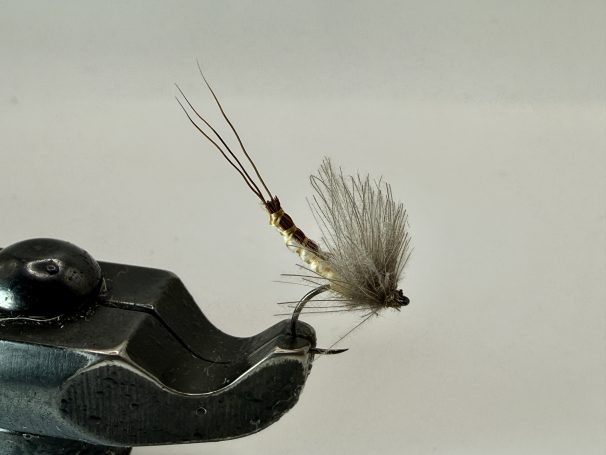
This month I will demonstrate how to tie an extended body Hendrickson pattern using some of this hair and CDC fibers. There are so many options in how you construct an extended body mayfly, and they are all great in my opinion. Extended bodies are an acquired skill that take practice, which is the only way that you can get better at anything. If you want to take a deep dive into these style of flies, two outstanding tyers and teachers offer up a rather large list of flies for you to learn. Barry Ord Clarke, and Davy McPhail would be the two folks whom I would steer you towards in shortening that learning curve. If you haven’t yet subscribed or bookmarked their Youtube channels, I suggest doing so as they will both make you a better tyer.
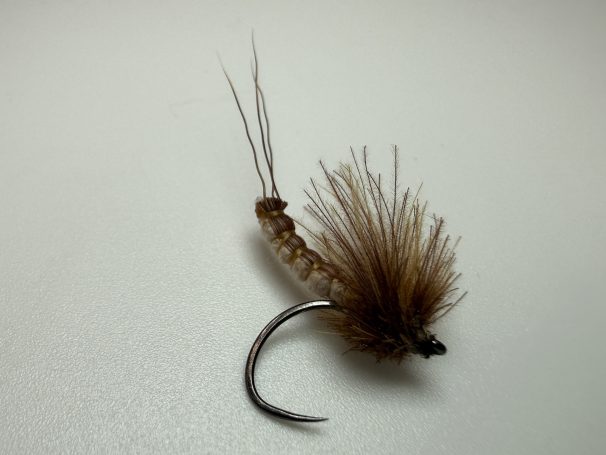
Most folks are content tying and fishing standard straight hook imitations for the Hendrickson hatch, myself included. But sometimes having something a bit different can save the day on pressured or finicky trout. An extended body pattern although a little more involved can often be the trick and even though I would say this size is about as small as I like to tie extended body flies, it can prove to be worthwhile. Most importantly, you will learn another set of skills that you can add to your tying library. And this particular set of skills is one that works well if you take part in fishing the biggest bugs of the season; brown, green or golden drakes. Won’t be long now, and these bugs will be on the water.